|
“Innovation” and “Millennials” are indisputably two of today’s hottest business buzzwords; it seems like just about every company out there is seeking to produce the former and attract the later, but what do Millennials really consider to be innovations that matter in their lives? Using a visual research platform called GlimpzIt, we asked Millennials (age 19-35) to show us a picture that represents an innovative product or service they’ve purchased recently that made their life better in some way. Our respondents, who were primarily women (90%) with an average age of 29, uploaded images (called “glimpzes”) to visually demonstrate what was important to them about the innovative product or service they chose. They included a short text caption to explain their choice. These images were evaluated by a panel of peers to see which ones resonated with them, resulting in a total of 200 respondents and peer evaluators. Overall, these Millennials’ responses indicate that innovation for them has much more to do with how it fits in their lives and enables them to meet their goals and aspiration than any actual features or technological advances. Many of the products chosen wouldn’t even be characterized by most marketers as “innovative”, including such everyday items as an alarm clock, a stand mixer, an electric kettle, a baby blanket, and removable storage hooks. Five key themes emerged from this research: Family, Time, Relax, Easy and Multi-Purpose. The first three things are “life” benefits, the last is product-focused and Easy straddles both. Selected pictures and comments shown below are from those actually submitted by the research respondents.  1. Family Lots of the products and services selected improved these people’s lives by offering benefits to their family—more space, ability to cook food everyone loves, comfort/entertain a child, and even the ability to grow one’s family (a fertility treatment!). Several people talked about the primary benefit of the selected product/service as enabling quality time spent together as a family. One respondent, talking about the meal-delivery service Blue Apron, summarized it beautifully as, “it's not just meals at your door, but it's an experience you can share with your loved ones.”  2. Time Time in this context is primarily about saving time. For some people, this means having more time for things they enjoy. The picture and caption above speak to valuable moments re-captured for a busy mom by her electric kettle so she can indulge in a good book before her kids wake up. Another woman thought her new alarm clock was innovative, because with it, she can actually wake up in time to eat breakfast! On the flip side, several people talked about products that help get the most out of the time they have. One woman praised the multi-tasking ability of her smartphone (“I feel like my iPhone has helped me do so many things at once!”) while another was excited about the additional RAM she recently added to her computer to make it run faster.  3. Relax With Millennials’ busy lives, finding ways to relax, re-charge, and de-stress are highly important. But the products and services these respondents said helped them feel relaxed and peaceful aren’t all necessarily what you might expect. This photo represents peace and rejuvenation derived from a blender! Another woman talked about how her new phone’s camera took beautiful pictures which helped her feel less stress and more peace. The take-away here is that products that are a delight to use and make it simple to get the results you want are giving Millennials a sense of relaxation, calm and peace. Winding down after a busy day and getting some much-needed rest is also key. One person shared a picture of her new LED bedroom night light, saying, “…it makes the night so relaxing and calm. I sleep much better now.” 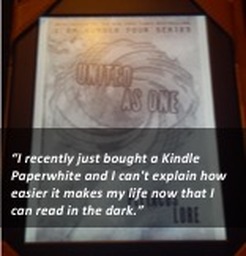 4. Easy Millennials in this research view products that are easy to use and make life easier as meaningful innovations. In some cases, this may be linked with the earlier time-saving or relaxation themes, as one woman describes about the beautiful pictures her new smartphone takes, “It makes my life easier and less stressful so I feel more at peace.” Just having an easy-to-use product with a simple, effective design can be a delight in and of itself. One woman shared her Apple TV as an innovation example because of its simple interface, while others love apps that make things easy without professional expertise (e.g. money management, photo editing). 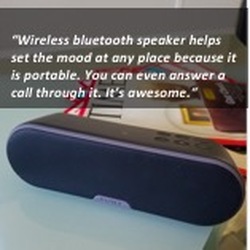 5. Multi-Purpose Millennials value products that have multiple functions, uses, or even can be used in multiple locations as making their life better. Several in this research specifically chose smart/connected products that do multiple jobs as their favorite recent innovations. One woman talked about how she loves that her smartphone “has helped me do so many things at once.” While another showed a picture of her smart TV that also lets her access games and classic movies to share with her kids. In summary, when seeking to innovate for Millennials, prioritize products and services that help them connect with family, save time, help them feel relaxed and calm, are easy to use and make their lives easier, and serve multiple functions. Consider also how existing products, services, and advertising can be tweaked or adapted to communicate these important benefits.
2 Comments
 This was my second year attending IIeX (Insight Innovation Exchange) and it was great to learn about so many innovative new approaches, technology, and suppliers in the market research space. Below are the top 6 themes that I took away from IIeX 2016--what's new and what's next in insights!
Key Insights Industry Trends: 1. The Commoditization of Research Execution
Key take-away: Automating non-value added work can be faster, cheaper and more accurate. However, it can never replace an actual human for creativity, influencing and engaging, convincing and telling stories. 2. Bite-sized, Right Sized
Key take-away: In our information-overload, time-starved world, collecting and communicating data in bite-sized amounts can increase engagement all around. 3. Storytelling Everywhere
Key take-away: Emotion is required for action, whether it’s consumer buying behavior or client/stakeholder decision making, and nothing gets to emotions better than a good story. 4. Rise of Machine Learning
Key take-away: Advances in machine learning mean that computers can take over hours of laborious hand-coding of text and emotion—it’s not perfect yet, but it is much more scalable. 5. Visualization Drives Clarity
Key take-away: Visualization in survey design can help increase accuracy (e.g. visual scales, pictures + words), while in reporting and strategy documents, it’s a way to bring the content to life. 6. Behavioral Research: Actions Speak Louder
Key take-away: Identify research respondents via actual behavior (vs. claimed) to increase accuracy. Also, brain science tells us that most decisions are made unconsciously, so don’t rely only on what people say, but also consider implicit and behavioral findings.  Some friends came over this past weekend and brought a strategy/building game I had never played before. They gave me the basics of the rules to start, then I figured out the rest as we played. Perhaps because I didn't know all of the rules or I was new to the game, I made several moves that the others questioned or advised me against. Call it intuitiveness—or stubbornness—but I proceeded with those plays anyway. And I won the game.
It's common enough for first time game-players to win and when they do, we call it beginner’s luck (at least the annoyed, more experienced players do.) Reflecting on this experience, I couldn't help but think of the connection to innovation. How many times have we seen startups ignore or break “the rules” and end up disrupting entire industries? How many stories have we heard (apocryphal or otherwise) about employees in large companies ignoring management directives, sometimes even working in secret or on their own time in order to develop the next big thing? How can we make our own beginner’s luck to bring fresh perspective for innovation? Here are three areas to think about: 1. Internal Resources: When planning a brainstorming or ideation session, invite new hires, interns, administrators, and/or colleagues from other departments or disciplines. Ideally, they will bring different ways of thinking, help challenge assumptions, come up with new combinations of ideas, or provide relevant analogs from their personal lives and professional experiences. Pair more and less experienced people together for maximum benefit. 2. External Resources: Working with external specialists and consultants can often move projects forward exponentially, but also consider tapping experts from other, analogous fields for inspiration. What might a veterinary tech be able to learn from a physician’s assistant or vice-versa? What inspiration could a home improvement retailer gain from a professional visual artist? Another way to leverage the “beginner” as an external resource is to consult with a researcher who is an expert in technique, but perhaps new to your specific category. In a previous role on a beauty brand, I frequently worked with a male moderator who used his gender to plead complete category ignorance with female consumers and therefore got a lot of detailed and useful feedback. I recently completed a research project with a restaurant client, and having never dined in their—or their primary competitor’s restaurants—was able to bring a fresh and unbiased view to the findings that the client found highly credible. 3. Techniques/Approaches: When doing in-context or ethnographic research, coach teams to approach it with “alien eyes.” Meaning, try to consciously put aside existing assumptions and really notice, as if for the first time, elements of the interviewee’s physical environment, how they perform tasks and use products, etc. This can help you uncover inefficiencies, compensating behaviors, and inconsistencies that can lead to innovative solutions. Another technique, “innovation by analogy” looks to other industries or the natural world for inspiration by asking questions like “Who else encounters similar problems or challenges?” or “How else has a problem like this been solved before?” Another tool I love to use for ideation, is insight or technology “mash-ups.” It’s a relatively simple technique in which you create a grid or pairs of disparate ideas, consumer insights or problems, product features or benefits—or technologies. By forcing your brain to find connections between two seemingly unrelated things, you can often come up with something truly unique. There’s a Japanese Zen concept, frequently associated with the late Steve Jobs, called “shoshin,” meaning “beginner’s mind,” which involves approaching a subject as a beginner would—with openness and a lack of preconception—even if you are an expert. This is the counterpoint to the cognitive bias called “the curse of knowledge,” whereby an expert assumes what s/he knows is commonly known and has trouble seeing from the perspective of a novice. Leveraging the resources and approaches listed above can help us see from a beginner’s perspective all over again—building a bridge to that “lucky” break through to true innovation. CC image courtesy of Alexandre Duret-Lutz on Flickr |
AuthorSarah Faulkner, Owner Faulkner Insights Archives
July 2021
Categories
All
|

 RSS Feed

Copyright 2014-2023
All Rights Reserved
All Rights Reserved